11/03/26
How does digital signage support corporate social responsibility?
Corporate social responsibility used to live in a glossy annual report. Today it lives on a spreadsheet, and someone in finance has to defend every line of it.
That shift changes how companies buy things. A video wall in a lobby is no longer just an aesthetic decision. It is an energy load, a waste stream, a procurement record, and eventually a line item in an ESG disclosure. Facilities now get asked a question they rarely faced a decade ago: what does this screen actually cost the planet, and can you prove it?
Digital signage sits in an interesting spot in the sustainability conversation. It replaces something wasteful, printed material that gets thrown away, but it replaces it with something that draws power every hour it runs. Whether that trade works in a company's favor depends almost entirely on the hardware chosen and how it gets operated.
What Corporate Social Responsibility Actually Requires Now
CSR covers how a company treats the environment, its people, and its community. The environmental piece has become the most heavily measured, because regulators and investors now want numbers instead of narrative.
Most of that measurement runs through the Greenhouse Gas Protocol, which sorts emissions into Scope 1, Scope 2, and Scope 3. According to the U.S. Environmental Protection Agency, Scope 2 covers indirect emissions tied to purchased electricity, steam, heat, or cooling. For most organizations, every display plugged into the grid adds directly to that Scope 2 total.
That single fact reframes the entire purchase. A display is not a one-time capital expense anymore. It is a recurring emissions entry that shows up every reporting year for as long as the screen stays on the wall.
The Print Waste Problem Digital Signage Solves
Printed signage carries a footprint most people never see. Paper gets manufactured, inked, laminated, mounted, shipped, installed, and then removed. A promotional poster for a two-week campaign consumes all of that for fourteen days of use. Across the broader paper stream, the scale is significant. According to the U.S. Environmental Protection Agency, paper and paperboard made up the largest component of municipal solid waste in 2018, and 17.2 million tons still went to landfills that year despite a 68 percent recycling rate.
A digital display absorbs that recurring cycle into one piece of hardware. Content changes in seconds. No reprint, no shipping, no disposal, no landfill entry. For any organization that updates messaging weekly or monthly, the displaced print volume over a screen's lifetime becomes substantial.
The benefit scales with how often content changes. A lobby display rotating daily announcements delivers a far stronger case than a screen showing the same static image for three years. Organizations should document the specific printed items a display retires, not just assert that it went paperless.
Where Most Sustainability Claims Fall Apart
Here is the part the marketing brochures skip. A poorly chosen display can consume more resources than the printing it eliminated. Large-format LED video walls can draw anywhere from 200 to 600 watts per square meter depending on brightness, pixel pitch, and content. Run one continuously at high brightness and the energy footprint grows quickly.
Then there is heat. Nearly all the electricity a display consumes converts into heat inside the building. A display drawing one kilowatt adds roughly one kilowatt of heat to the conditioned space. The HVAC system has to remove it, burning more electricity in the process. Traditional high-power video walls often force facilities teams to add dedicated cooling, which turns one energy problem into two.
The third issue is e-waste. Digital signage trades recurring paper waste for electronic equipment, cabling, controllers, and eventual disposal. A display that fails after three years generates more lifecycle impact than one that runs for a decade, because manufacturing represents a large share of total environmental cost. Spreading that manufacturing footprint across more operating years is one of the most effective sustainability levers available.
Any honest CSR case for digital signage has to address all three: power, heat, and hardware longevity.
How DreamWall's Engineering Addresses Each Segment
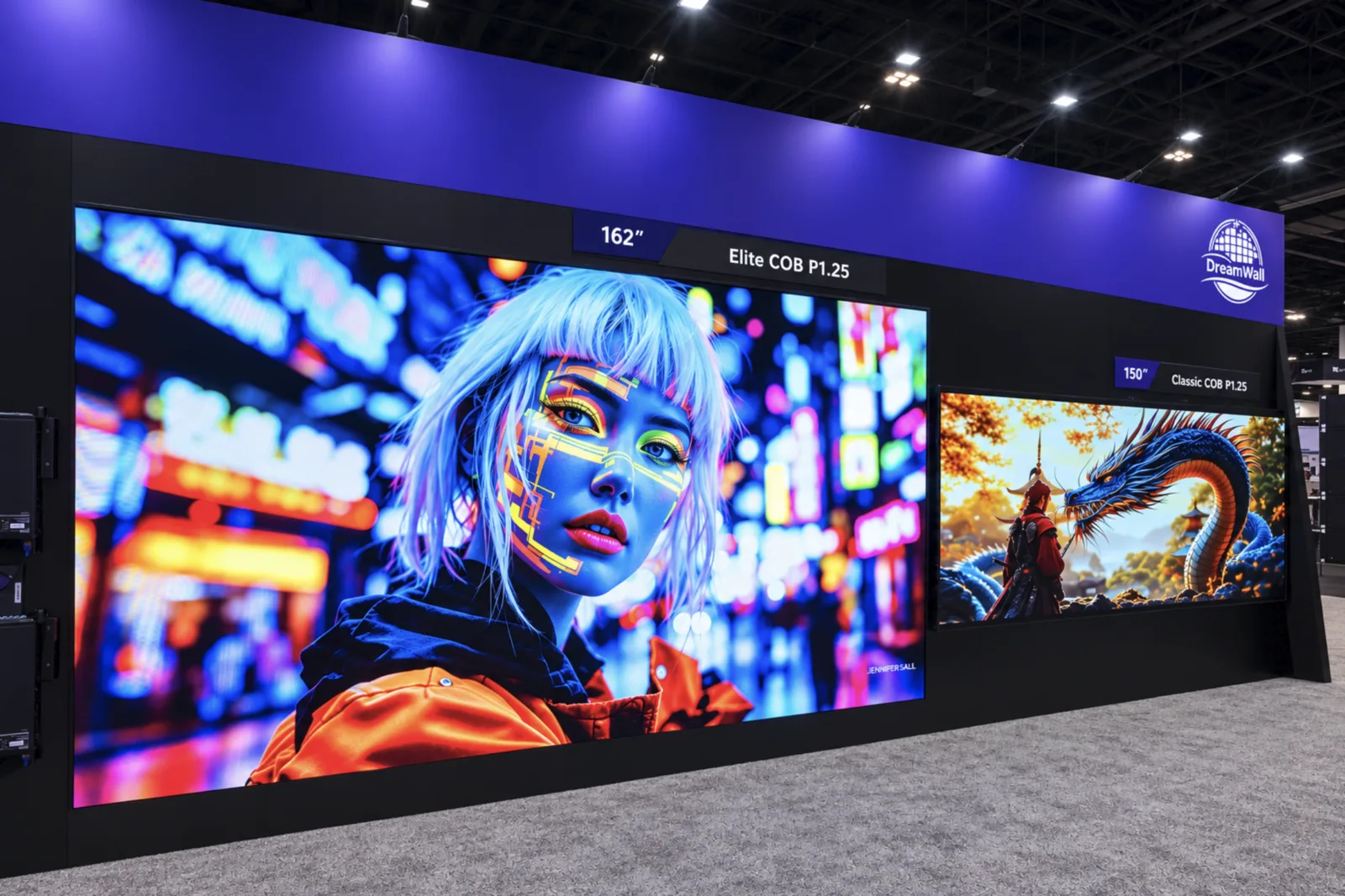
This is precisely where hardware selection stops being a technical detail and becomes a sustainability decision. DreamWall built its CooLED MicroLED platform around efficiency rather than treating it as a marketing afterthought. The displays operate at roughly 50 watts per cabinet, an industry-leading figure that directly reduces the Scope 2 electricity entry a company has to report each year.
The heat problem gets solved at the source. Because CooLED technology draws so little power, it generates near-zero heat. Many DreamWall indoor installations run on a single 20-amp circuit with no additional HVAC requirement. That eliminates the secondary cooling load entirely rather than engineering around it, which means the building avoids both the equipment cost and the ongoing energy penalty.
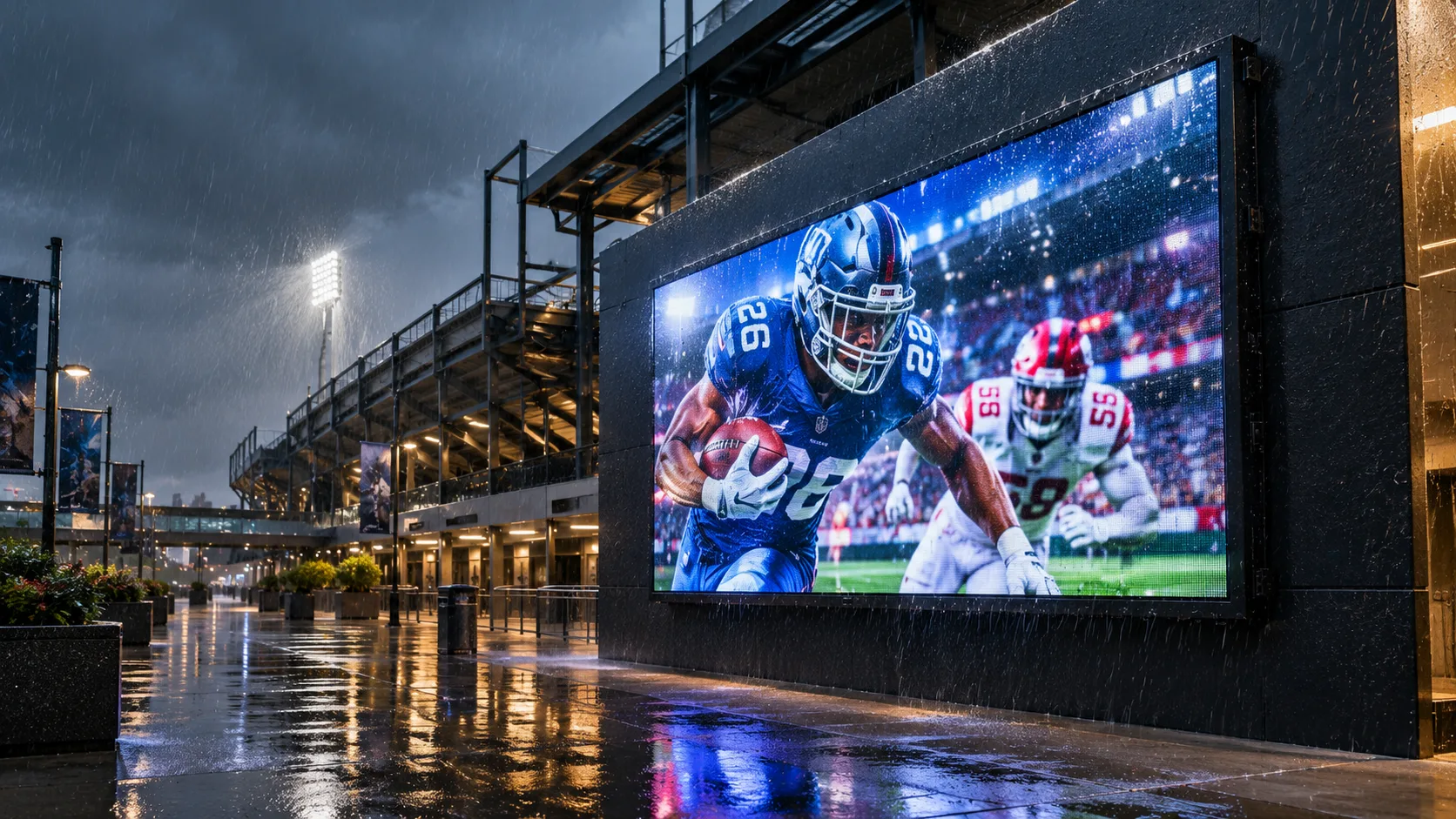
Longevity closes the loop. DreamWall's Outdoor CooLED is rated for 100,000 hours of operation and backed by a five-year warranty. For context, ENERGY STAR notes that commercial-grade signage displays designed for continuous use may reach lifespans of up to 100,000 hours, compared with roughly 50,000 hours for consumer-grade panels. Compared with a consumer-grade screen, a display that lasts twice as long spreads its manufacturing impact over twice the service life and cuts replacement, shipping, and disposal cycles roughly in half.
The COB and GOB protection technology reinforces this. Impact-resistant and dust-proof construction means fewer module failures, fewer service calls, and fewer components heading to a recycler before their time. DreamWall also holds CE, ETL, FCC, RoHS, and BSCI certifications. RoHS matters specifically for CSR reporting because it restricts hazardous substances in electronic equipment, which supports responsible end-of-life handling.
Hardware efficiency and product sustainability come together clearly in the Monarch, DreamWall's All-in-One LED Display for Business. It runs on a single standard power cord with no external processor rack. It folds to 60 percent of its volume for transport and ships in an included flight case. For companies running events, that design replaces the repeated build-and-discard cycle of printed event graphics and staging materials with one reusable asset. The Monarch also carries lifetime maintenance support, which directly extends useful service life.
A Practical Framework for Reporting the Impact
Companies building a credible CSR case around digital signage should track four categories.
Energy: Measure annual kWh per display and watts at operating brightness. This feeds directly into Scope 2 emissions reporting.
Heat: Measure HVAC load avoided and any added cooling equipment required. This captures the secondary energy cost most reports miss.
Waste Displaced: Measure printed units and weight retired per year. This documents the print reduction with actual numbers.
Longevity: Measure rated service life, warranty term, and repairability. This spreads manufacturing impact across more years.
The formula for the energy pillar is straightforward. Multiply the display's operating wattage by annual hours of use, then divide by 1,000 to get kilowatt-hours. Apply the local grid emissions factor and the Scope 2 figure follows.
Two operational habits improve every one of these numbers. Scheduling displays to power down outside business hours can cut energy use significantly for screens that would otherwise run around the clock. Ambient light dimming reduces brightness, and therefore power draw, when the room does not need full output.
Why This Matters Beyond the Environmental Column
CSR is not only about carbon. Digital signage supports the social side too. Screens deliver safety information, emergency alerts, and accessibility content faster than any printed notice. Content can be updated instantly across every location during an incident.
Multilingual messaging rotates on the same screen without printing separate versions. Community initiatives, charitable partnerships, and employee recognition get visible placement without producing a single sheet of paper.
There is also a transparency benefit. Companies increasingly display live sustainability data in their lobbies, showing real-time energy generation, waste diversion rates, or progress toward emissions targets. The display becomes the reporting instrument, not just another thing to report on.
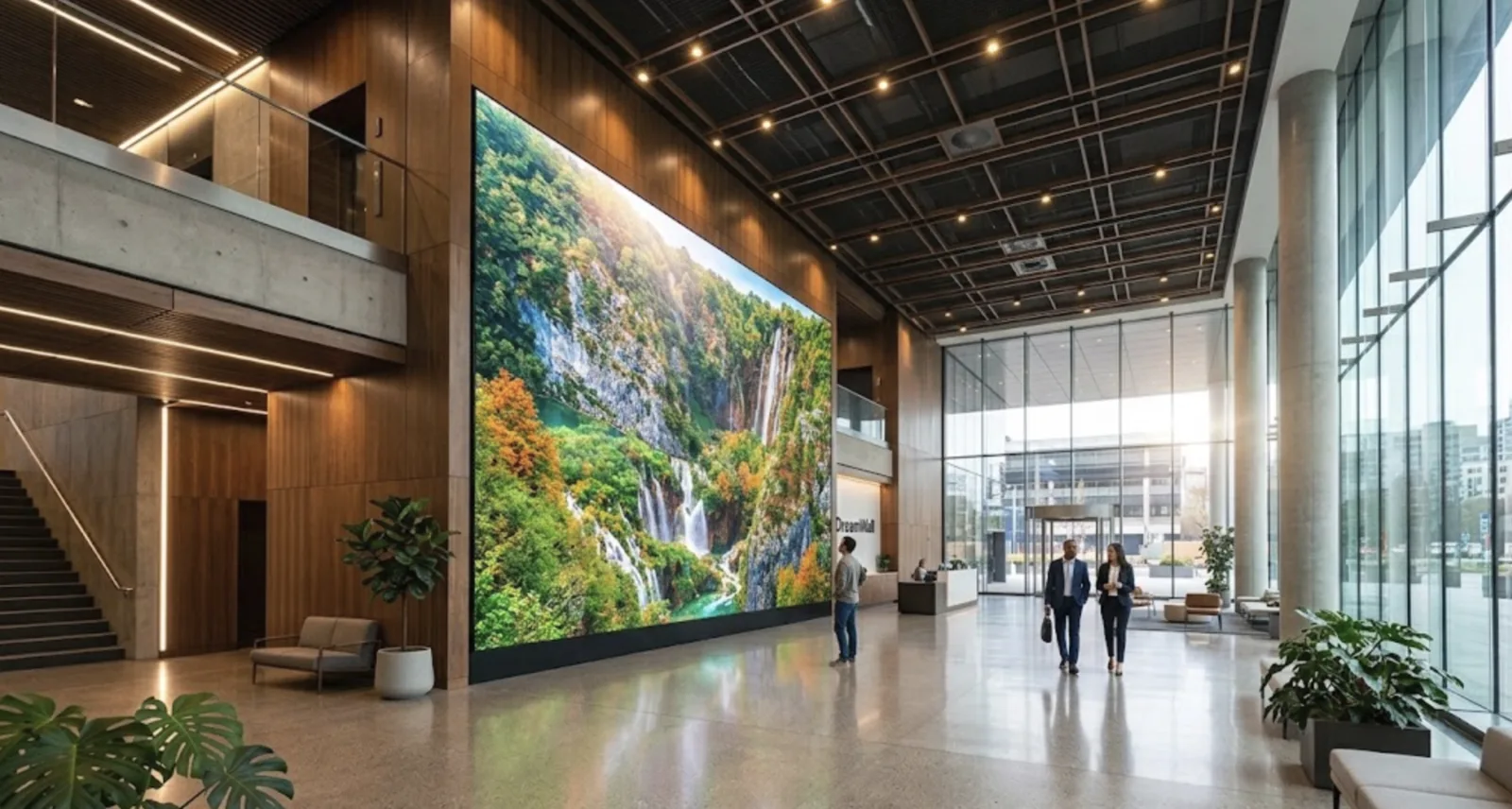
DreamWall supports this across the environments where it matters most: corporate boardrooms, executive lobbies, retail spaces, museums, hotels, and control centers. Every installation runs through a vetted professional integrator network with U.S.-based technical support from the company's Houston headquarters, which means shorter service response and less unnecessary hardware replacement.
Digital signage supports corporate social responsibility when the hardware is efficient, the heat load is low, the lifespan is long, and the impact is measured honestly. It does not support CSR automatically. A bright, power-hungry screen running continuously can easily undo the paper savings it was meant to deliver.
The distinction comes down to engineering. Ultra-low power draw, near-zero heat output, 100,000-hour lifespans, and RoHS-certified construction turn a display from an environmental liability into a defensible line in a sustainability report.
Ready to build a display system that strengthens your sustainability story instead of complicating it? Contact us today to design a DreamWall solution engineered for your environment, your audience, and your CSR goals.