11/10/26
What Is a Micro LED Display? A Plain-English Guide for Buyers
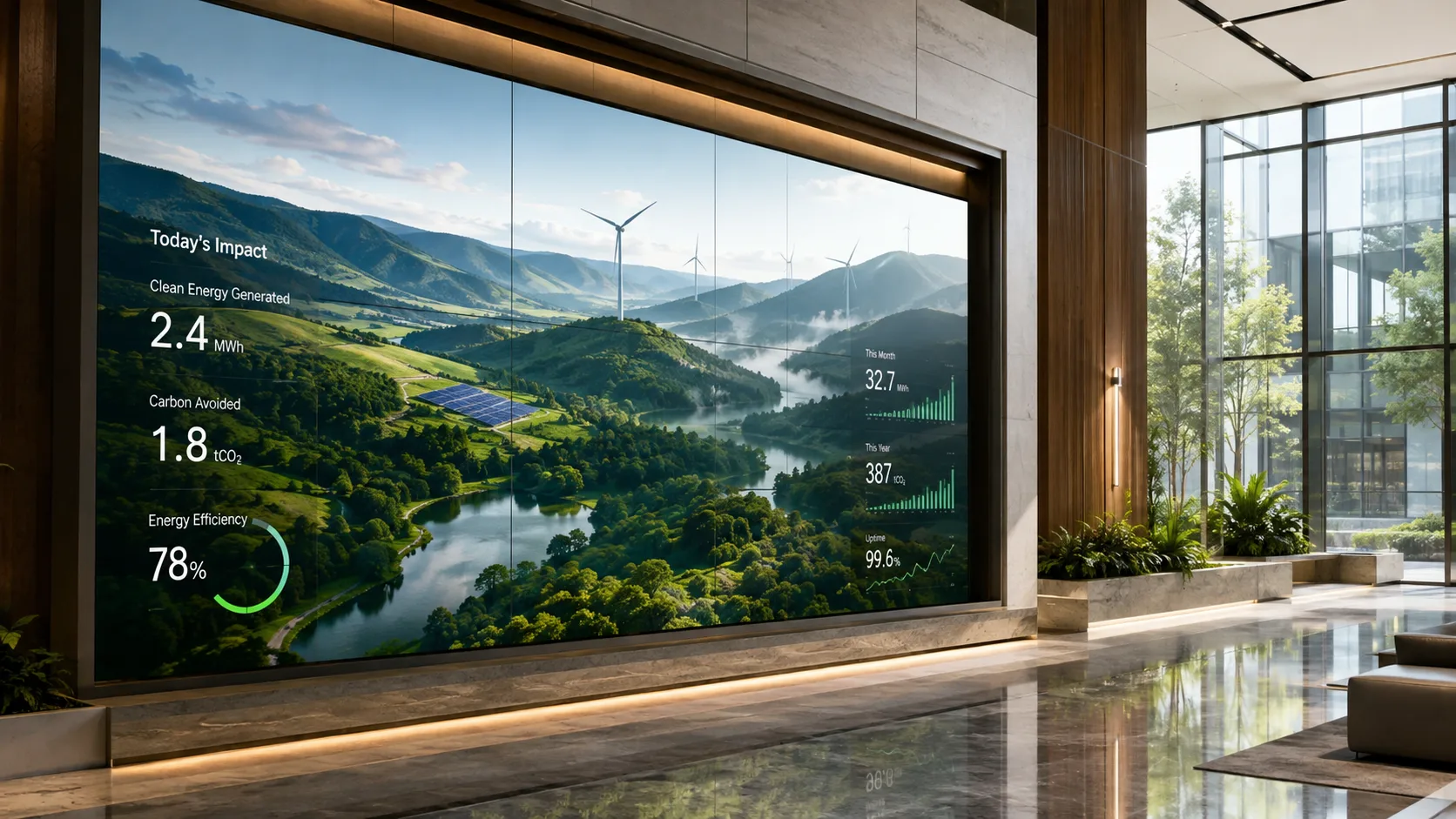
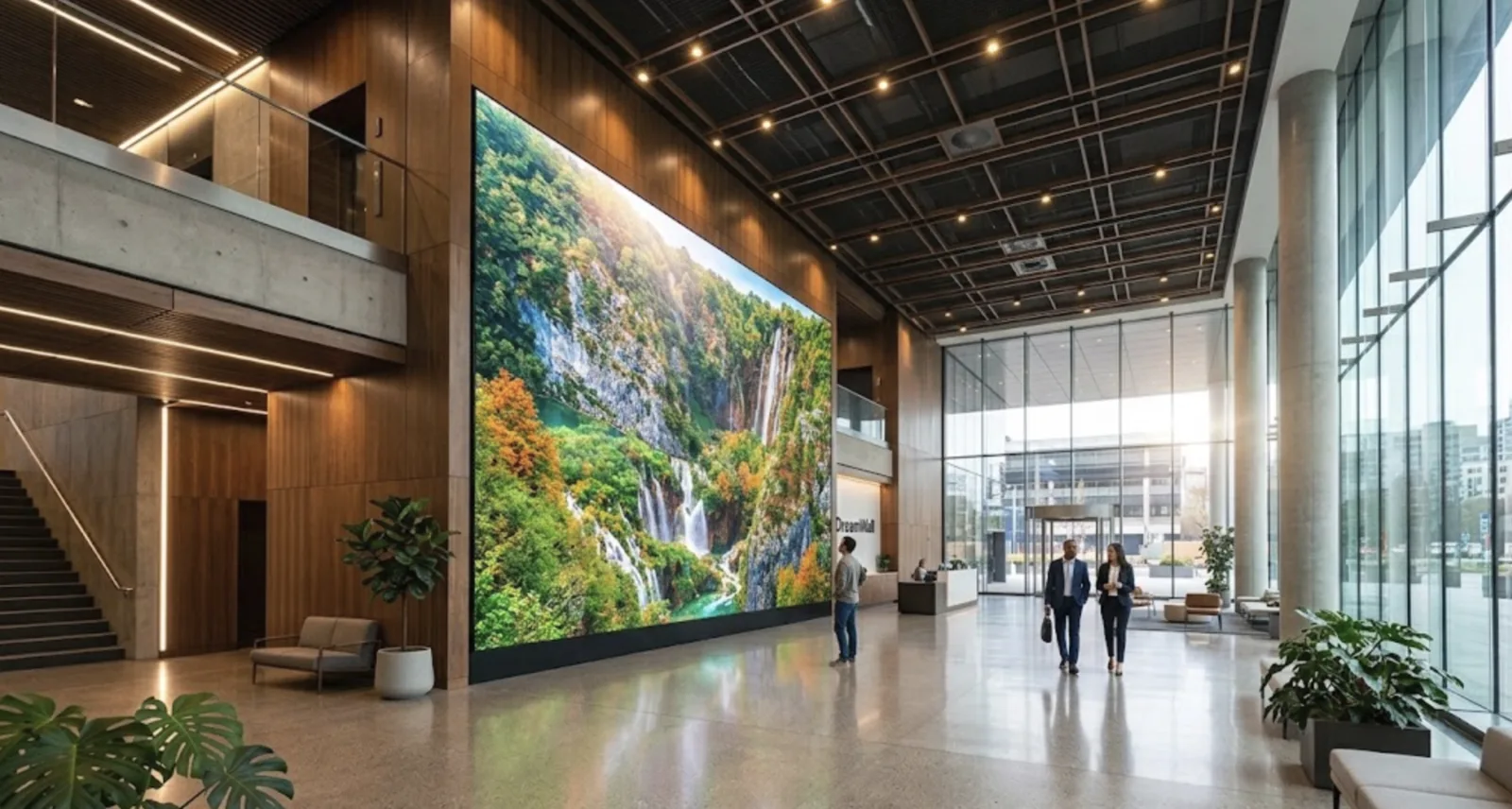
You walk into a lobby, and the screen on the wall looks like a window. Colors pop. Blacks look deep. There are no thick borders and no washed-out corners. Odds are, you're looking at a micro LED display.
So what is a micro LED display, and is it worth the money? At DreamWall, we build the Indoor CooLED video wall display and indoor LED digital signage, so buyers ask us this often. This guide gives you a straight answer without the spec-sheet fog.
Here is the problem. Choosing the right display today means wading through LED, Mini LED, Micro LED, OLED and more. Every brand claims to be the sharpest and the brightest. Two products with the same label can be built very differently. Pick the wrong one and you may overpay, run up the power bill, or end up with a wall that looks great in the showroom and flat in your lobby.
In our work with dealers and customers, the same questions come up again and again. What is it? How is it different from OLED? What should I check before I buy? Let's take them in order.
What Is a Micro LED Display and How Does It Work?
A micro LED display is a screen made of millions of microscopic LEDs that each produce their own light. Because every pixel glows on its own, the screen can switch pixels fully off for true black. Micro LED panels offer high brightness, wide viewing angles and sharp images, and they can be tiled into large video walls.
Size is the key idea here. Opto Plus LED's technical guide lists a micro LED chip at about 10 micrometers across. A traditional LED dot is around 1.9 millimeters, and a Mini LED chip runs 50 to 200 micrometers. Tiny chips let makers pack in more pixels, and more pixels mean a sharper image.
One note on wording. In the video wall industry, "MicroLED" often describes fine-pitch, direct-view LED walls. Strictly, the term refers to the very small chip. When you shop, ask for the chip size and the pixel pitch, not just the label.
Pixel pitch is the distance from the center of one pixel to the next. A smaller pitch gives a sharper picture at close range. DreamWall's Elite Platinum wall, for example, has a 0.7 pixel pitch. It won a Best of Show award at CEDIA Expo 2026 in Denver, according to DreamWall's technology article.
How does a micro LED display work?
A micro LED display works by packing tiny red, green and blue LEDs onto a circuit board. A driver chip switches each LED on and off thousands of times per second. The eye blends those flashes into a steady image. Because each LED makes its own light, no backlight or color filter is needed.
Here is the part most guides skip. A video wall does not light every pixel at once. That would use far too much power. Instead, it lights a few rows at a time, very fast.
DreamWall's engineers give an example. With a 1/60 scan mode and a 3840Hz refresh rate, only one row out of every 60 is lit on each refresh. On a native 4K wall with 2,160 rows, that means 36 rows glow at a time. Your eye blends it all into one steady picture.
Two numbers describe this:
Refresh rate: How many times per second the screen redraws. 3840Hz is common in the industry. DreamWall's Elite series runs at 7680Hz.
Scan mode: How many rows light up each cycle. A lower ratio, such as 1/36 instead of 1/60, lights more rows. That adds brightness and contrast, but it also uses more energy and gives off more heat.
Micro LED vs. Mini LED vs. OLED: What's the Difference?
Most confusion comes from comparing these four side by side. Here is the short version:
Traditional LED: Dots of about 1.9 mm. Best for simple digits, icons and low-cost signs.
Mini LED: Chips of 50 to 200 micrometers. Usually used as an LCD backlight with local dimming. Contrast is strong, but an LCD panel still sits in front, so blacks get close to black rather than fully black.
Micro LED: Chips of about 10 micrometers. Each pixel makes its own light, so it can switch fully off for true black.
OLED: Also self-lit, with deep blacks. It uses organic materials, while micro LED uses inorganic LEDs, which generally handle high brightness better.
Why do micro LED displays cost more?
The short answer is manufacturing. Micro LED still suffers from low mass-transfer yields and has only reached small-volume production. Low yield means higher prices. The market is still young. Omdia expects micro LED display revenue to double to about $105.4 million in 2026. That is a small number next to the overall display market, so prices have not had time to fall the way LCD prices did.
The better question is not "is it cheap?" but "will it cost me less over time?" Power and heat drive operating cost. DreamWall puts its approach this way: "a great picture and energy efficiency are not mutually exclusive." Its Elite Gold walls typically need only one 20-amp circuit for the most common sizes. Less power means less heat, and less heat means lower cooling bills.
What Should You Look for in a Micro LED Video Wall?
Spec sheets are packed with numbers. These five matter most:
Pixel pitch and viewing distance. Pick a pitch that matches how close people will stand. Finer pitch costs more, so don't pay for detail your audience can't see.
Refresh rate. Higher rates reduce flicker and camera banding. If your wall will be filmed or streamed, this matters a lot.
Scan mode. Ask what it is. It tells you how hard the wall works to make its picture.
Power and heat. Ask how many circuits a common size needs. Ask how much cooling the room will need.
Indoor or outdoor build. An indoor wall and an outdoor wall are engineered for different conditions. Buy the one made for your space.
Get these answers in writing. A vendor who can explain scan mode and power draw in plain English is usually one you can trust after the sale. For a deeper look at the engineering, read The Technology Behind DreamWall's CooLED Video Wall Displays. To compare formats, see the different types of video wall displays.
Frequently Asked Questions
Not sure which format fits? Start with your room, your viewing distance and your budget. Then compare walls using the five checks above. Indoors, explore DreamWall's Elite series. For bright public spaces, see outdoor LED digital signage built for the weather. Ready to talk specs? Contact DreamWall and our team will help you choose a micro LED video wall that fits your space and your budget.